
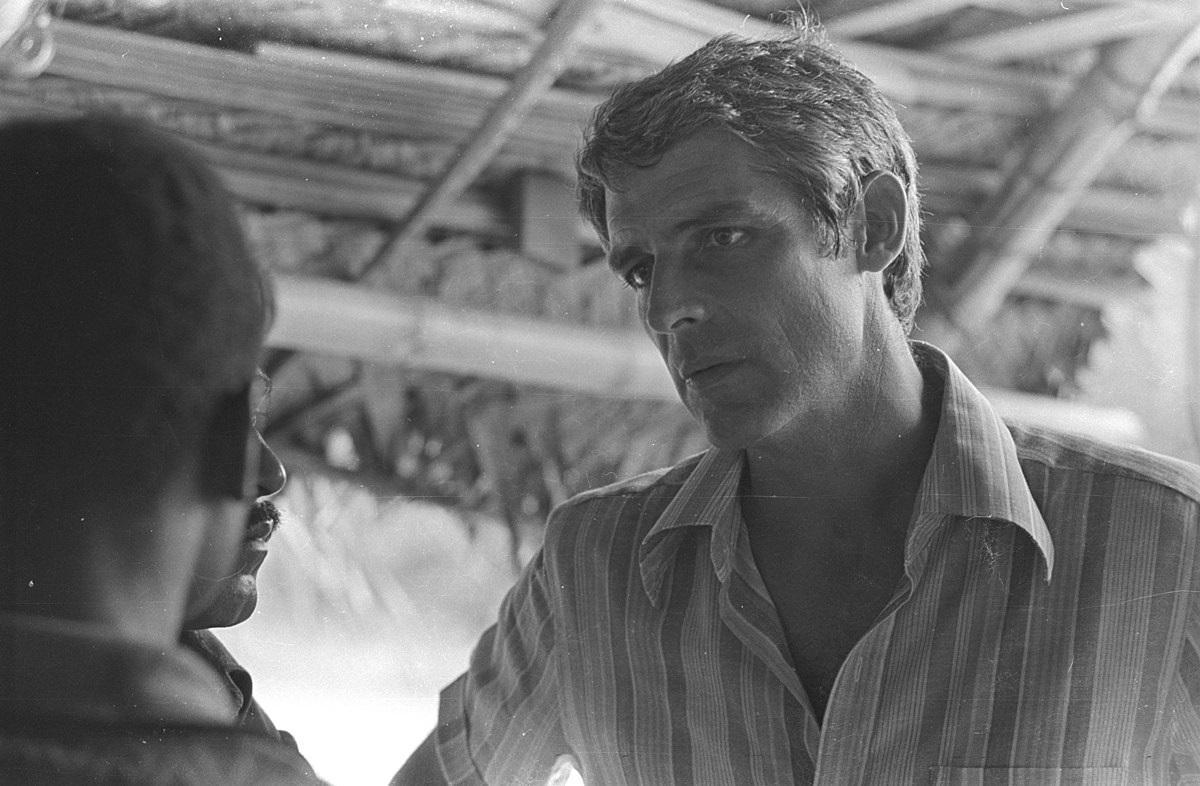
Jose Forjaz, a well regarded Mozambican/Portuguese architect died this week in Portugal following an illness. He was 88 years old.
Forjaz moved to Mozambique as a child and later began practising as an architect the in the erstwhile Portuguese colony. In the early years he worked as draughtsman for another renowned architect, Pancho Guedes.
After a time studying in the United States at Columbia University, he returned to Africa and opened his practice in Swaziland where he was just one of three architects in the whole country. In 1975 with the independence of Mozambique and the programme of the national reconstruction he returned to the country where he held several prominent posts including that of Minister of Public Works and Housing. The Supreme Court, Hero’s Monument and the Museum of Fisheries are some of his many projects.
Forjaz’s work transcended that of an architect, his exposure to the historical inequalities and changing circumstances of Mozambique; from colonial outpost to a struggling marxist state, to a nation writhing itself out of a legacy of civil war and conflict allowed him to have profound reflections on society, economics, politics and culture which permeated his work.
When asked about the state of architecture in Mozambique, Forjaz explained that there is a lot of work still to be done in joining the various pillars which make up a society; in planning alone these relate to resolving the conflicts between spatial distribution, speculation in the housing market and urban privilege. These challenges make it difficult to provide equitable housing conditions as is possible in other countries.
Part of the problem, he said, lay in the maturity of the state’s institutions due to the very people that are part of it. There are too many ministries often with agendas that clash or are in conflict with each other, leading to poor functioning of the services delivered to citizens. At at time, more than ever when the technical capabilities of the institutions should be separated from the political goings-on, it is understood that many decisions are politically influenced. Each time there is a change in government, the entire structure is upended and rebuilt placing in jeopardy the development of the country.
And as it is often said, the people with the most influence are also the people with the least concern for any ideology. This last part is particularly significant since Mozambique became a nation with socialist inclinations just after independence. Today, neoliberalism had edged the country to the point where savage capitalism is increasingly in vogue.
the people with the most influence are also the people with the least concern for any ideology
Forjaz maintained his optimism about Mozambique despite signs of a discontented society. He noted that Europe was previously beset by wars and only came into its own in the last century and suggests that it is necessary for Mozambicans to become self-reliant in recognition of the state of their country.
Forjaz was interviewed by Portuguese broadcaster RTP in the mid-2010s, the full interview is available here
 Terra Velha