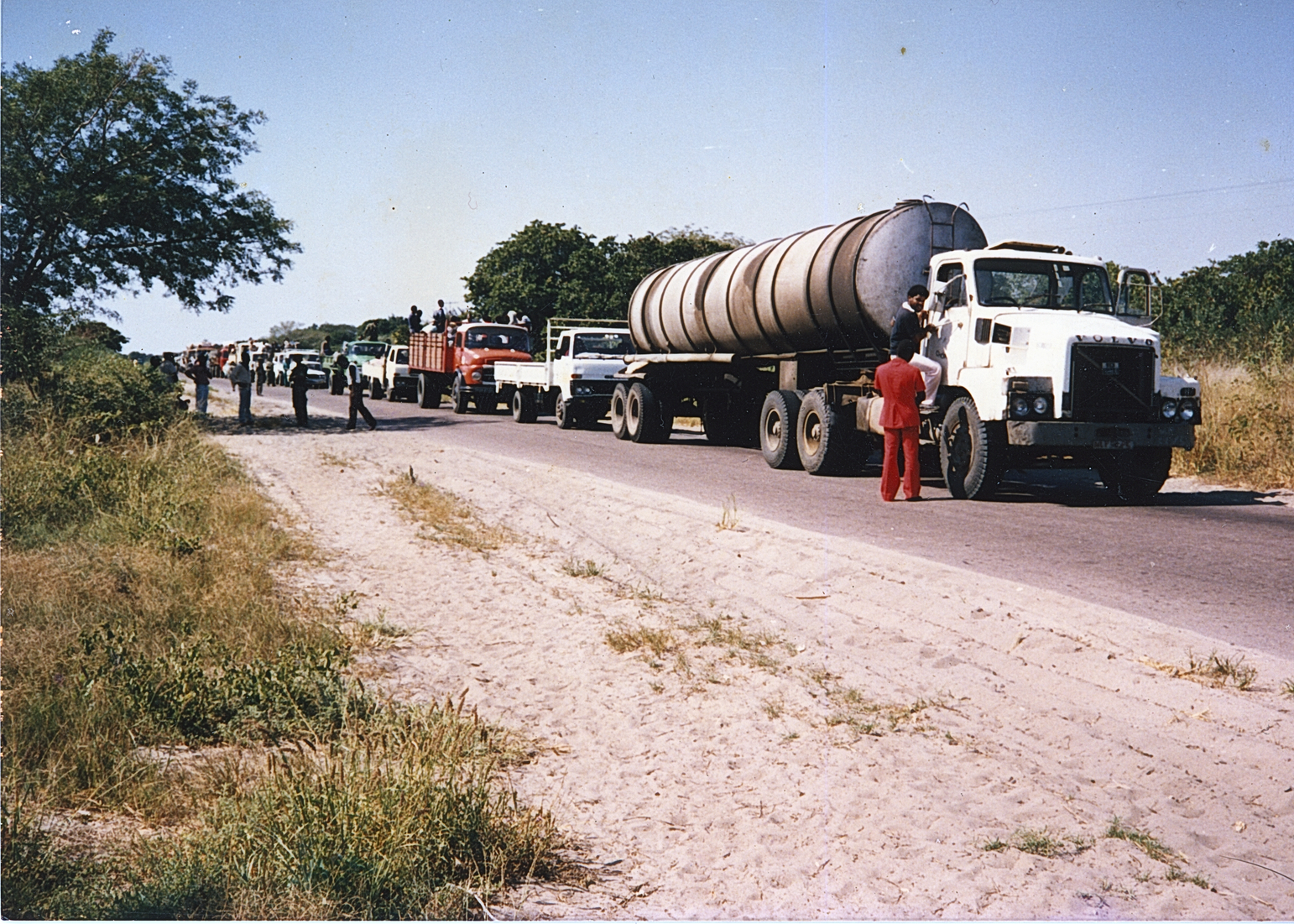
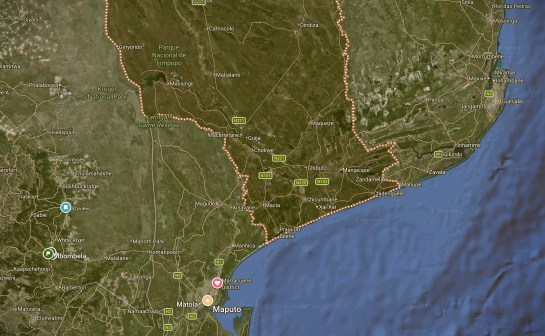
This photo taken in 1986 in Gaza Province, depicts the movement of a convoy. By this time, it was no longer the peak of the civil war, however, RENAMO was still active in various parts of the country in an attempt to destabilize it. Given the insecurity, convoys of trucks heavy and light, transporting goods and people waited their turn to be escorted by the Mozambican army (FAM) along the main national highway, EN1.
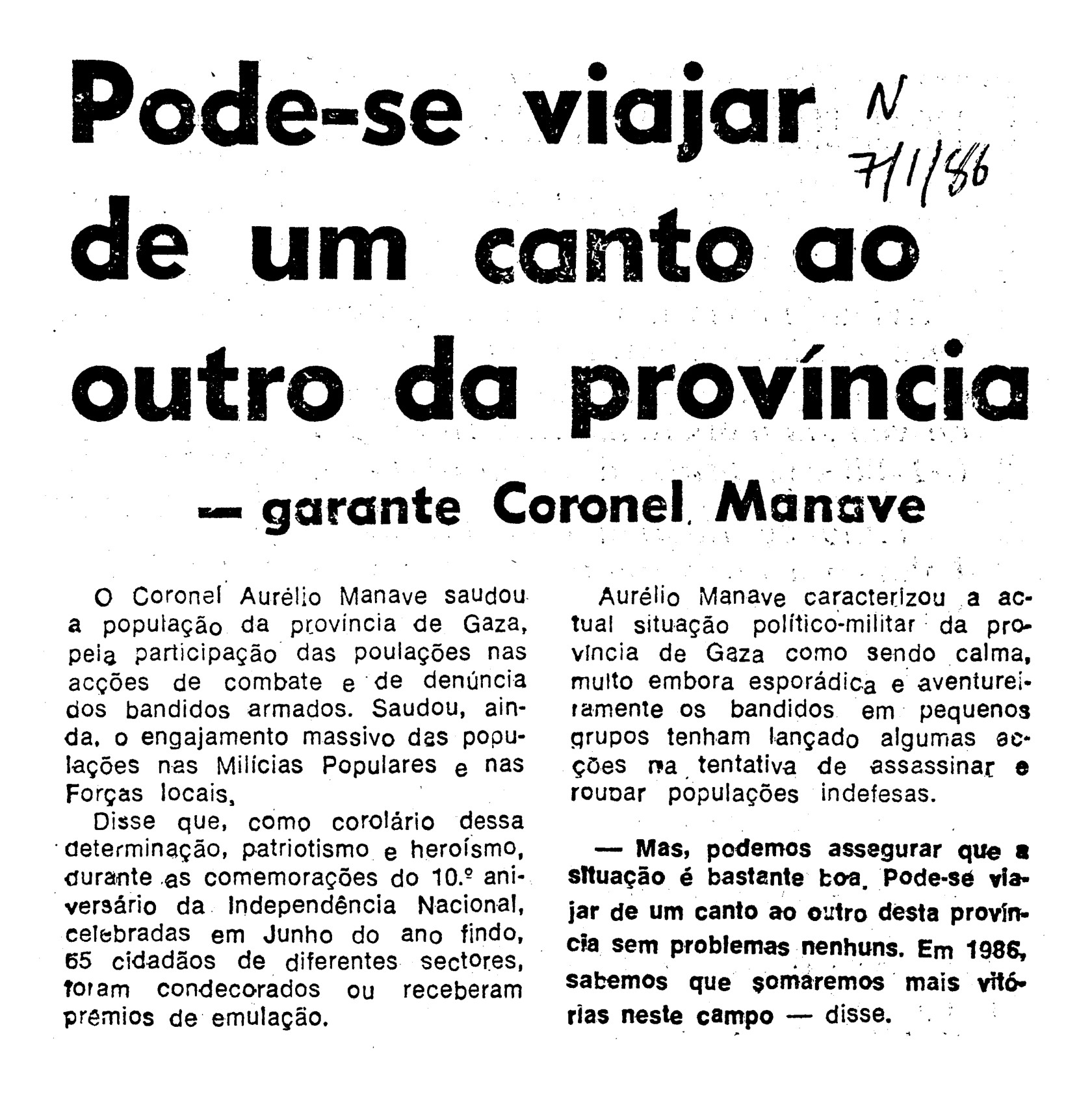
The photo does not include dates but 1986 was also the year in which Samora Machel was killed in a plane crash. It was also two years after the Inkomati Accords were signed and there was already evidence that the South African had increased the number of attacks in Mozambique. Some of the press material, especially one report by Colonel Aurelio Manave to the national newspaper stated that the security had improved and that it was now possible to travel from one corner of Gaza to another.
Clouds huddled over the skies of Maputo. Scarcely had anyone expected heavy rains that evening as the forecast had predicted a hot and humid day like so many of the previous weeks.
It was the perfect day for a presidential inauguration where Daniel Chapo would finally assume office after a tempestuous, violent and much contested election. Final preparatives were being made as the dignatories arrived and took their seats. The reporters from the local press jostled for a privileged position hoping to score an interview or two.
Outside the city, in the suburban localities the slayings continued. It was only during the evening and after the ceremony had concluded that reports began to emerge of even more bloodshed. All sensitivity to death seems to have been lost. In November, the UIR (a kind of specialized armed unit) fired at demonstrators still with some hesitation and fearful of international condemnation. That seems to be gone now. Anyone who is unlucky may be shot in cold blood and not a feather is ruffled.
The dark clouds are more than anything symbolic of the disjoint between the peoples right for self-determination and the imposition of an order by a cruel regime. It is a day that will go down in the history of this continent; a sign that perhaps wars cannot be ended by dialog. A sobering reminder that guns are fought with other guns.
wars cannot be ended by dialog. A sobering reminder that guns are fought with other guns.
As the ceremony wound down and the guests ceremoniously left the venue, their appeared to be a palpable fear in the air that a conflict had just begun in Mozambique. It is a new type of war in which the enemy is faceless, does not don any particular uniform or identify with any color.
Such is a very real possibility considering that the fabric of Mozambican society is diverse. The elections were able to cut transversally across languages, regions and economic classes. What unites Mozambicans now is the common feeling of betrayal and the will to remove the aggressor.
Those changes will not be seen in the quiet and calm avenues of Ponta Vermelha, where soldiers armed to the teeth protect the Presidency from marauders, as the Administration views them. Those battles, of a silent and undeclared war, will be waged in the districts and the villages; grey zone operations which may easily go out of hand.
FRELIMO has established a formidable institution over the last 50 years. It has utilized a variety of subversive techniques to influence public opinion and the press. It relies on information and disinformation to achieve control; selling promises of a better tomorrow. The state is poorly equipped in terms of ordnance and outside the capital, firepower is not used to establish control.
How its administrators, handpicked and appointed in the poorest and deprived districts of the country will fare is cast in doubt should a “people’s war” erupt. There would be no hope of restraint and the entire house of cards would come tumbling down. After all, that is how the war of independence started and the Portuguese driven out in 1974.

 Terra Velha