Archive

Politics of Mozambique

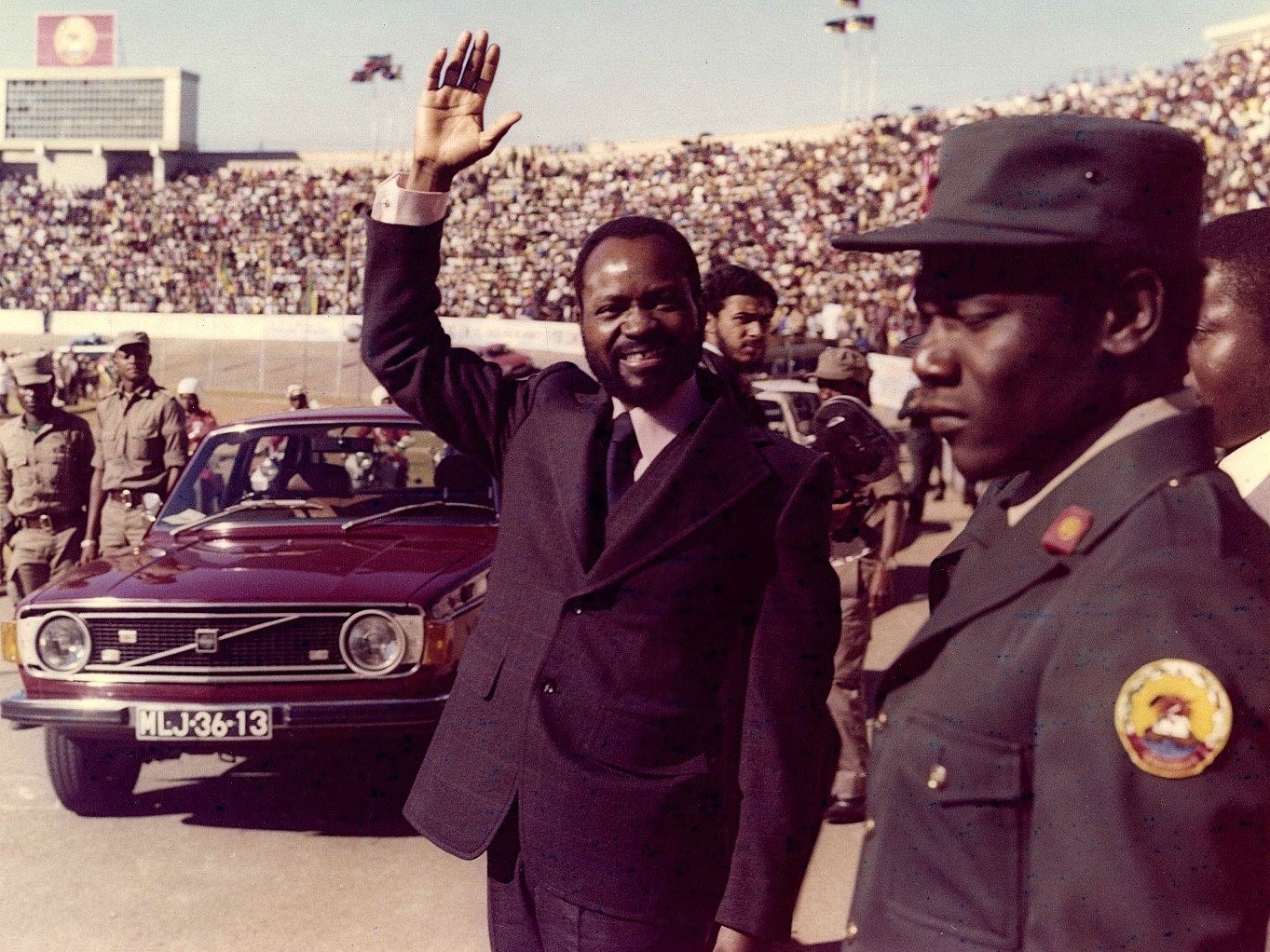
Samora Machel in Machava

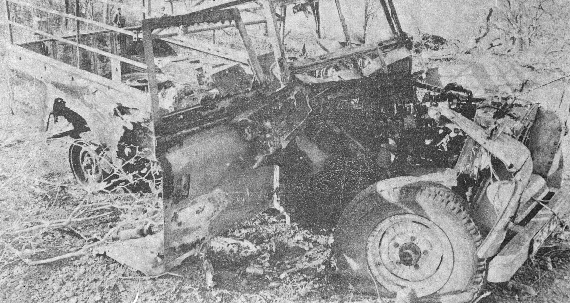
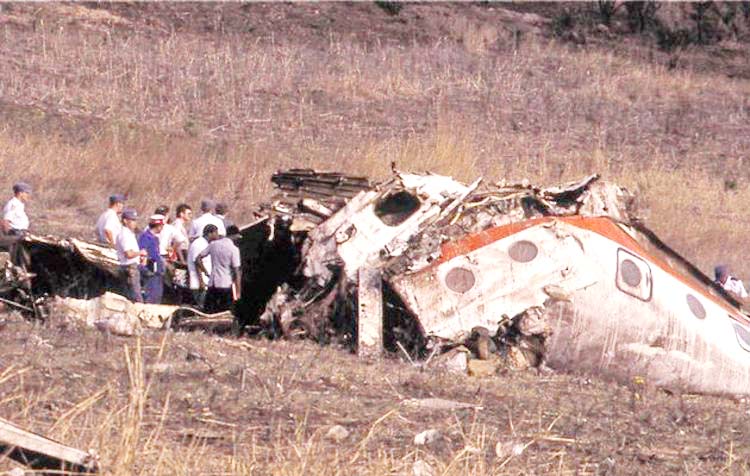
It has been 38 years since Mozambique’s first president died when his plane crashed one clear night near the mountains of Mbuzini. The sentiment of loss was palpable across the continent and if it was not, FRELIMO certainly did put out a showstopper of a state funeral to honour the man who unshackled the country from 500 years of Portuguese rule.

But more recent reflections of Machel suggest that the public’s perception is bittersweet. When the Portuguese flag was lowered on midnight of June 25th 1975, Mozambicans were convinced that an unheralded and prosperous future was within arm’s reach. The euphoria of change; persuasive catchphrases such as “A Luta Continua” belied the suffering that was to come.

Historians agree that the country made significant gains in the period 1975-1980, however, Machel was not content solely with a liberated Mozambique. He had turned his gaze over the borders to Zimbabwe and later South Africa, two veritable opponents led by minority white governments.

South Africa did not accept another state meddling in its affairs particularly as it tried to keep the ANC out. This resulted in it throwing its military prowess behind RENAMO. Birthed by the Rhodesian government and made up of a hodgepodge of disaffected people, it was swift in destabilizing Mozambique.

RENAMO’s main tactic was destabilization of the economy and the infrastructure that underpinned it. During the colonial area, railways and ports had been developed to allow transit out of Mozambique and also into it to the hinterland states of Zimbabwe and Malawi which generated enormous wealth for the country.

By 1983, Mozambique was in a ruinous state. The economy had hobbled along in the first years of independence but the civil war dashed hopes of returning it to a functional state. Trade deficit widened and the agricultural sector collapsed after two years of a particularly hard draught.

In Maputo Machel looked on as the country burned down, continuing the rhetoric of increasing productivity and publicly scolding RENAMO’s guerilla tactics. But it was clear to the public that FRELIMO and Mozambique were losing the war. What had started out as a child of Machel’s idealism – the liberation of Africa south of the Sahara was too costly of an investment.

With pressure mounting, the Nkomati Accord of 1984 demonstrated that Machel could be a pragmatic leader. In the agreement Mozambique would stop giving refuge to exiled members of the ANC and South Africa would halt its support to RENAMO. Much to Mozambique’s devastation, South Africa did not keep up its end of the agreement and the war continued.

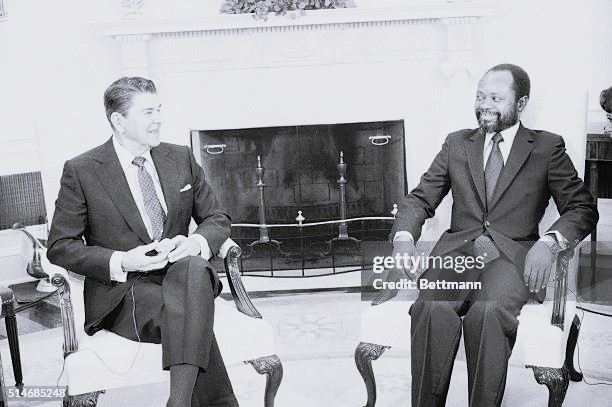
At what was the height of the cold war and with resources scant from Moscow, Machel went to the United States in September of 1985. Although conservatives in US had long lobbied then president Ronald Reagan to provide support to RENAMO, the US continued its position of “constructive engagement”.

If there was an inkling of hope that Machel could steer the country aright, it was delivered in the content of his speech that day at the South Portico of the White House. For the first time, Machel acknowledged that he was ready to accept private investment in the country. A feat of sorts for a hardline socialist. He explained that the country was endowed with vast mineral riches and looking for a partner to engage in exploration.

Despite his softening stance towards the West, Machel remained stubborn in the consolidation of the frontline states – those states working to undo apartheid South Africa’s stronghold in the region. When Malawi refused to join the SADCC, an irate Machel made plans to shut the borders and fire missiles into the country. Press reports of the time suggest that relations between Mozambique and South Africa hit an all-time low and that Machel was aware of a plot being devised to kill him.

Years after the crash, the exact conditions of the downing of the plane are not clear. Initial reports had indicated that the Soviet pilots were drunk; other reports suggested that the South Africans developed a moveable navigation beacon to falsely guide the plane into the mountains. Even more sinisterly, the beacon at the airport in Maputo was switched off with the collaboration of Mozambican generals who wanted Machel dead.

The independence of Zimbabwe in 1980 deluded Machel into thinking he could repeat the scenario in South Africa. The highlights of 1984 and 1985 showed that Machel was trying to turn the tide but his adversaries had already charted a different path.

Machel left a lasting legacy of activism. Many of nation’s youth continue to listen to his speeches often in want of that which is missing in the political landscape of the country today. Although he had lead a movement that successfully overthrew colonialism, he spent the remaining years in office preoccupied in waging wars which brought about severe economic hardship and decline.

Politicians and entertainers often share the same fate which is that while flying high on the back of good times their fall is often sudden and dramatic.

By October 9th, 17 million Mozambicans had registered to vote in the general elections. The turnout was less than expected but observers and the public noted grave irregularities in the process and the contested election results led to a nation-wide boycott. The aggrieved opposition resorted to its horde of internet savvy denizens to orchestrate a shutdown of the country. Confrontations between law enforcement and an irate public ensued with accusations of police brutality. The events continue to unfold in a scenario that would have been better written into a plot.

Sensing changing tides, a group of academics, lawyers and journalists banded together to develop what would be this nation’s first citizen manifesto. Such a task could not have been more opportune. By getting citizens to imagine a favourable tomorrow, there is lesser chance of breaking what is there today as prolonged protests, however peaceful, invariably lead to destruction.

To remake Mozambique as a country safe for citizenship, the motto of the manifesto, means to have a serious reflection on the political trajectory of the country, one that encourages, facilitates and protects the discharge of citizens’ rights, according to the manifesto; which puts at centre the rights of citizens for self-determination.

At a time when confidence in the public institutions, whose cardinal preoccupations would be to serve the public is at an all-time low, Mozambicans are living in an increasingly autocratic and tyrannous nation.

The citizen manifesto makes a call, but is not limited to the review of:

  • Separation of powers
  • Presidential powers
  • Electoral justice
  • Political inclusion and participation
  • Regional and local autonomy and decentralization
  • Freedoms of expression
  • Standards and structures for economic and social development
  • National reconcilliation
  • Role of the State

The manifesto ends with an appeal to all public actors and institutions; political parties and social organizations for the calling of a National Conference to establish a way out of the post electoral crisis in the spirit of “Mozambique as a country safe for citizenship“.

Manifesto Cidadão
“Fazer de Moçambique um País Seguro para a Cidadania”