
Archive

Tag Archives: Mozambique

By October 9th, 17 million Mozambicans had registered to vote in the general elections. The turnout was less than expected but observers and the public noted grave irregularities in the process and the contested election results led to a nation-wide boycott. The aggrieved opposition resorted to its horde of internet savvy denizens to orchestrate a shutdown of the country. Confrontations between law enforcement and an irate public ensued with accusations of police brutality. The events continue to unfold in a scenario that would have been better written into a plot.

Sensing changing tides, a group of academics, lawyers and journalists banded together to develop what would be this nation’s first citizen manifesto. Such a task could not have been more opportune. By getting citizens to imagine a favourable tomorrow, there is lesser chance of breaking what is there today as prolonged protests, however peaceful, invariably lead to destruction.

To remake Mozambique as a country safe for citizenship, the motto of the manifesto, means to have a serious reflection on the political trajectory of the country, one that encourages, facilitates and protects the discharge of citizens’ rights, according to the manifesto; which puts at centre the rights of citizens for self-determination.

At a time when confidence in the public institutions, whose cardinal preoccupations would be to serve the public is at an all-time low, Mozambicans are living in an increasingly autocratic and tyrannous nation.

The citizen manifesto makes a call, but is not limited to the review of:

  • Separation of powers
  • Presidential powers
  • Electoral justice
  • Political inclusion and participation
  • Regional and local autonomy and decentralization
  • Freedoms of expression
  • Standards and structures for economic and social development
  • National reconcilliation
  • Role of the State

The manifesto ends with an appeal to all public actors and institutions; political parties and social organizations for the calling of a National Conference to establish a way out of the post electoral crisis in the spirit of “Mozambique as a country safe for citizenship“.
Manifesto Cidadão
“Fazer de Moçambique um País Seguro para a Cidadania”

2By the early 1980s Mozambique’s economy and its social fabric were in a dizzying spin towards obliteration. It was not a surprise, and even the venerable and much celebrated Samora Machel had admitted as much to his confidantes. The aura of 1975 that was to herald the beginning of the end of 500 years of colonial rule was fading.

In the capital, Maputo, hundreds queued in front of bakeries, food stalls and pharmacies. They eagerly expected to be a handful of the lucky few. Those who were unable to secure the goods however had to have other means of ensuring their survival. At the core, a shadow economy had gradually begun to replace the broken and unequal one that mostly served the elite.

Those who were unable to partake of the state’s meager provisions willingly turned to prostitution and all forms of crime under the sun. The government arguing the lack of a productive workforce and and the public’s waning allegiance launched in 1983 what was to become one of the most controversial of projects in the then young nation’s history.

Murky Waters

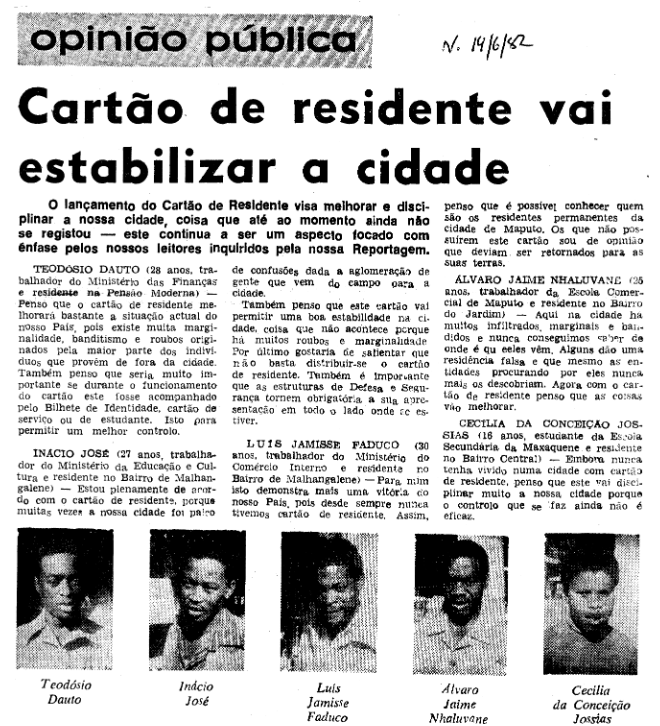
Urban poverty was thrust into the spotlight not long after independence. There were several factors including an economy that had been destroyed by white flight and the subsequent decree that allowed for people that previously lived in rural areas to inexpensively rent property in the city. Long standing residents were the first to decry the lack of security and the strain on public services.JornalNoticias190682 Many publicly denounced the governments failure. Calls came in for prerequisites to justify residency. Then, acutely conscious of its image, a government decree was issued on 20th June 1983 authorizing only those with resident cards and proof of employment to stay.

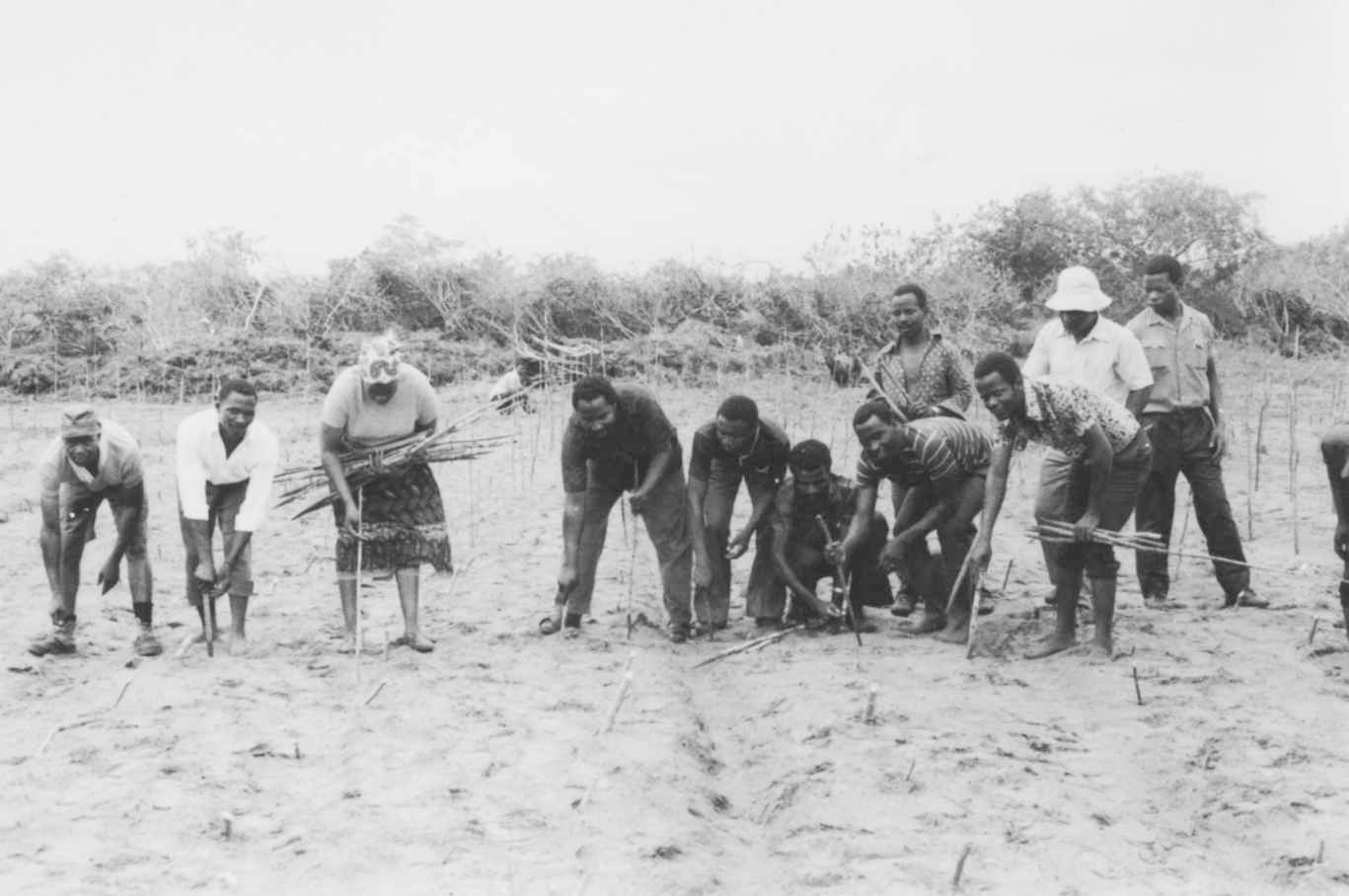
For the unfortunate few that could not produce the said documentation, they were picked from the streets and bundled into trucks that made their way to the North of the country where they were to engage in agricultural projects. The country was hungry and it needed food, it was said.

Failure

The programme came to an official end in 1988. By then, Samora Machel had perished in a fiery crash and Mozambique was sheepishly admitting that Socialism and Marxism had failed its people. The government gained significant notoriety for how it had handled the programme. Men, women and children were left in remote parts of the country to fend for themselves. There were no signs of  civilization in these areas let alone tools and machinery for farming. Through the grapevine, the rest of the country heard of rapes, tortures and and how people were set free only to be attacked by wild animals.

It was a good programme aimed at rehabilitating delinquents and marginal people. Today they make fun of us, they say it was a criminal programme, but it was full of humanism.

Moving Beyond Perception

While there is no shortage of negative press and conjecture about the programme, there are some who have advocated the programme in principal. Joaquim Chissano, the country’s second president has said, “It was a good programme aimed at rehabilitating delinquents and marginal people. Today they make fun of us, they say it was a criminal programme, but it was full of humanism.”.

The situation now is no better.  The major capitals are re-living the nightmare that started all this. Rampant crime, poor municipal services and uncurbed population influx are at the centre of urban disfunction in Mozambique. There is no evidence of having re-instated these controls since 1988.

The title of this post is from the song in a 1985 music album by Sting entitled The Dream of The Blue Turtles. The song’s lyrics tell of the strike by the coal miners in Northern England and the systematic shutdown of an industry to the detriment of millions